






The stoner code 420 simply explained

The key facts at a glance
Origin and history of the 420 numeric code
Where does the mysterious numeric code 420 come from? You'll find out in this section.
Read more
Myths about the meaning of 4.20
Discover some of the myths that have grown up around the meaning of 420.
Read more
Happy 420 - When does 420 Day take place?
Every year the cannabis community celebrates 420 Day. Here you'll learn more about the date.
Read more
4. Answers to the most common questions
Answered directly – plus what the law says and which accessories fit.
Learn more
What does 420 mean?
420 (pronounced "four-twenty") is the worldwide numeric code of cannabis culture. It stands both for the time 4:20 in the afternoon as the traditional moment of consumption and for April 20 (20.04. or 4/20 in the US format), which is celebrated as an unofficial holiday centered on cannabis. The origin is a group of students from California in the early 1970s.
Origin and history of the 420 numeric code
The term "420" has established itself over the years as a significant symbol in cannabis culture. The origin of the number goes back to the early 1970s in California, USA. The most popular and widespread explanation for the origin of the 420 code lies in the story of a group of students at San Rafael High School, known as "The Waldos".
In 1971, the members of this group – Steve Capper, Dave Reddix, Jeffrey Noel, Larry Schwartz and Mark Gravich – met after school at 16:20 (or 4:20 PM in local time) to consume cannabis together. This specific time was chosen because it fell after school lessons and sporting activities, which allowed the youngsters to relax without neglecting their academic or extracurricular obligations.
The term „420“ was initially used as an internal code among the friends to refer to cannabis consumption without attracting attention. Over time, the code spread beyond the boundaries of the school and gained greater significance in the cannabis scene. A decisive moment in the spread of the term was the involvement of Grateful Dead, a well-known rock band of the 1970s, whose members and fans, the „Deadheads“, had an affinity for cannabis and the culture associated with it. Through the connection between the Waldos and the Grateful Dead community, the term 420 gained greater renown and eventually became a universal symbol for cannabis.
It is important to emphasize that 420 is purely a cultural code for cannabis and its consumption habits. It does not imply any medical or healing properties of cannabis and should not be misunderstood as such. While cannabis has been legalized for medical purposes in some regions, the laws and regulations in this regard vary greatly from country to country and from region to region.
In the following decades, April 20 (4/20 in the US date format) has established itself as an unofficial holiday in cannabis culture, on which people around the world celebrate the consumption of cannabis. This day is often accompanied by events and gatherings that address the social and cultural significance of cannabis.
The number combination 420 is a cultural phenomenon deeply rooted in the history of cannabis culture. Its significance goes beyond the simple act of consuming cannabis and symbolizes a broader spectrum of social and cultural practices.
Where does 420 come from? The origin of the code
The code 420 goes back to a group of students at San Rafael High School in California who called themselves „the Waldos" in 1971.
According to tradition, the Waldos met at 16:20 by a statue of Louis Pasteur to start a treasure hunt for a supposedly abandoned cannabis field. „420 Louis" became their internal meeting-point code, which was soon shortened to a brief „420". Through connections to the circle around the band Grateful Dead, the expression spread through the California scene. In the early 1990s, the US magazine High Times printed the term and made it internationally known. This is how a regional insider word became a worldwide code. The Waldos kept old letters and postmarks that support this origin story to this day — it is considered the best-documented explanation for the origin of 420.
What exactly does 4:20 (4.20) mean?
4:20 refers to the time 16:20 in the afternoon — according to the origin legend, the daily meeting point of the Waldos and today a symbolic moment of consumption.
Spellings like „4 20", „4.20" or „4:20" all mean the same thing: the twenty minutes past four in the afternoon. In cannabis culture, 16:20 is regarded as a tongue-in-cheek „right moment", much as some people talk about clocking off. The date later developed from the time: in the US, the month is written before the day, so 4/20 — April 20. Thus time and date merged into the same symbol. Important: 420 is a pure cultural code, not an indication of quantity or active ingredient. Anyone who reads the number today immediately recognizes the reference to the community — on T-shirts, in song lyrics, on grinders or as a house-number gag. The expression works internationally, regardless of the respective national language.
Why is April 20 (04/20) the 420 day?
April 20 (US format 4/20) is considered the unofficial holiday of cannabis culture because the date represents the number 420.
Around April 20, gatherings, festivals and demonstrations take place worldwide — sometimes as a relaxed celebration, sometimes as a political rally for a more liberal drug policy. Well-known meeting points include Hippie Hill in San Francisco or large gatherings in Canada and the USA. The timing in spring fits symbolically with the sowing season. In Germany, April 20 is not a public holiday, but it is increasingly perceived in the scene as a day of action. Many use the date to talk about education, youth protection and responsible use. Retailers also take up the day as an occasion. April 20 is thus less a fixed event than a flexible cultural reference point that each region observes differently.
420 in culture: From insider code to symbol
Today 420 is a worldwide understood identifying symbol of the cannabis community — in music, fashion, memes and everyday language.
From rap and reggae lyrics to streetwear to emojis: the number signals belonging without having to spell anything out. In films and series, 420 appears as an allusion — for example as a time on a clock or as a room number. Because the code is so established, brands also use it in a tongue-in-cheek way in marketing. At the same time, 420 stands for an attitude: enjoyment in moderation, community and openness instead of taboo. With legalization in several countries, the term has moved further out of the niche and is now understood more broadly than twenty years ago. For many, 420 has simply become a shorthand that bundles culture, history and a way of life into three digits — and that is precisely what explains its enduring popularity.
Is 420 legal in Germany? Legal situation in 2026
The number 420 itself is merely a cultural symbol and completely legal. For cannabis consumption, the Consumer Cannabis Act (KCanG) has applied in Germany since April 1, 2024.
As things currently stand (2026), adults may possess up to 25 grams in public spaces and up to 50 grams at home, as well as grow up to three plants for personal use. Distance rules apply to schools, daycare centers and sports facilities, as do clear requirements for the protection of minors — for minors everything remains prohibited. This is not legal advice: rules differ depending on the situation, can change and are in some cases interpreted differently from region to region. Anyone who wants to be on the safe side should find out about the specific requirements in their own location before April 20. The 420 culture itself — the number, date and symbolism — is unaffected by this and may be freely used, worn and celebrated.
420 as a police code? Common myths
No — the claim that 420 is a police radio code for cannabis is a myth. The documented origin leads to the Waldos.
Several false explanations are in circulation. The best known claims that „420" is a US police code; in reality, no such uniform code for cannabis exists. Equally persistent is the calculation about Bob Dylan's song „Rainy Day Women #12 & 35" (12 × 35 = 420) — a nice bit of number play, but without historical proof. The idea that there are exactly 420 active ingredients in the plant is also pure invention. Such stories often arise after the fact, because a neat explanation seems more memorable than the true one. The best-documented version remains that of the group of students from San Rafael, supported by preserved letters and postmarks. So anyone who wants to recount the origin correctly refers to the Waldos and not to police radio or song lyrics.
Was bedeutet +420? Vorwahl, Code 420 und „420 friendly“
+420 ist die internationale Telefonvorwahl von Tschechien und hat mit dem Kiffer-Code nichts zu tun. Wer nach „+420“ sucht, hat meistens einen Anruf aus dem Ausland verpasst.
Die Vorwahl gibt es seit 1997. Vorher teilten sich Tschechien und die Slowakei die gemeinsame Vorwahl +42 der früheren Tschechoslowakei. Seit der Aufteilung gilt +420 für Tschechien und +421 für die Slowakei. Eine Nummer mit +420 ist also schlicht ein tschechischer Anschluss.
Auch „Code 420“ hat zwei Bedeutungen. In der Szene ist damit der Zahlencode der Waldos gemeint. In der Technik taucht 420 als Fehlercode auf: Twitter nutzte ihn früher in seiner Schnittstelle mit der Meldung „Enhance Your Calm“, wenn zu viele Anfragen kamen. Ein offizieller Statuscode ist das nicht, der Standard dafür ist 429. Der augenzwinkernde Name zeigt aber, wie bekannt die Zahl selbst bei Programmierern ist.
Ebenfalls verbreitet ist „420 friendly“ in Kleinanzeigen und WG-Anzeigen. Das bedeutet, dass Mitbewohnerinnen und Mitbewohner kein Problem mit Cannabis haben.
The right accessories from Medusafilters


Myths about the meaning of 4.20
In the following section, we will shed light on some of the most popular myths and urban legends surrounding the meaning of 420 and the associated date, April 20. These myths have developed over the years within the cannabis scene and beyond, with many of them based more on popular lore and cultural folklore than on actual facts. From false assumptions about legal references to mistaken connections with historical events – these myths show how a simple code can inspire a multitude of stories and misunderstandings. Let us take a closer look at these myths and uncover their true origins.

Myth 1: A legal reference
A common myth claims that the number 420 in relation to cannabis comes from the California Penal Code. It is often mistakenly assumed that in California, Section 420 is linked to cannabis offenses. In reality, however, there is no such section in California law that specifically relates to cannabis. This myth probably arose from a mix-up or as part of an urban legend that developed as the term 420 became popular.
Myth 2: Bob Marley's date of death
Another myth surrounding the numeric code 420 is the claim that it is connected to the date of death of reggae icon Bob Marley. Some mistakenly believe that Bob Marley died on April 20 and that this day therefore holds special significance in cannabis culture. In reality, however, Bob Marley died on May 11, 1981, which disproves this myth. This myth appears to have arisen from a blending of Marley's well-known associations with cannabis and the symbolic value of the date 4/20.
Myth 3: 420 Day as the traditional planting day for cannabis
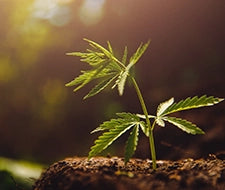
A myth that has developed in the context of the 420 code is the idea that April 20 (4/20) is traditionally considered the best day to plant cannabis. This assumption is based on the notion that the climatic conditions around this date are ideal for planting cannabis outdoors in many regions. In reality, however, there is no universal agricultural basis confirming April 20 as the optimal planting day for cannabis. The decision of when to plant cannabis depends on many factors, including the climate, the geographical location and the specific cannabis strain. This myth seems to have arisen more from the symbolic connection of the date with cannabis culture than from actual agricultural practices.
Happy 420 - When does 420 Day take place?
"420 Day" is celebrated every year on April 20 and is a date of special significance in cannabis culture. Although this day is often associated with the communal consumption of cannabis, it has developed into a broader cultural phenomenon that goes beyond mere consumption. Events and gatherings on this day often deal with topics such as the legalization of cannabis, education about its use and the social and political aspects associated with it. The four twenty Day is thus not only a symbol of cannabis consumption, but also a day for education and social discussion.
Here you'll find more on the topic of CBD


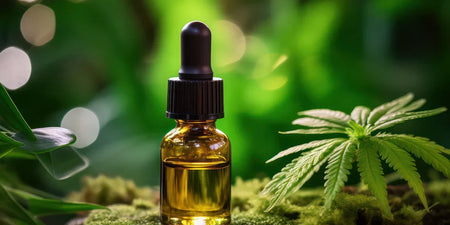


Is this legal in Germany? (As of 2026)
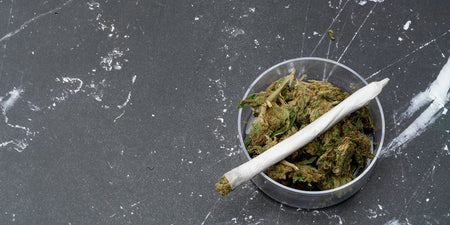
Cannabis has been legal for adults in Germany under clear limits since the Consumer Cannabis Act (KCanG) of April 1, 2024 – unchanged as of 2026. The most important key points:
- Possession: up to 25 g while out and about, up to 50 g at your place of residence.
- Home cultivation: up to 3 plants per adult person, protected against access by minors.
- Consumption bans: not within sight of schools, children's and youth facilities, playgrounds and sports facilities.
- Passing on & sale remain prohibited.
This is a general classification and not legal advice. These limits do not apply to accessories such as filters, papers or grinders – smoking accessories are freely available.
Further questions
420 is the international numeric code of cannabis culture. It stands for the time 4:20 PM and at the same time for April 20 (written 4/20 in the US format), which is considered an unofficial holiday. The code originated in the early 1970s in California and is now known worldwide as an identifying symbol of the community — on clothing, in music and in everyday life.
4:20 refers to the time 16:20 in the afternoon. According to the origin legend, this was the daily meeting point of a California group of students. Spellings like „4 20", „4.20" or „4:20" all mean the same thing. Today the moment is regarded in the scene as a tongue-in-cheek symbolic time — and the date April 20 later developed from this time.
April 20 is the unofficial holiday of cannabis culture, because in the US date format (4/20) the date represents the number 420. Around the world, gatherings, festivals and political rallies take place. In Germany the day is not a public holiday, but it is increasingly observed in the scene as a day of action centered on education and responsible use.
The number 420 as a symbol is completely legal. For consumption, the Consumer Cannabis Act has applied since April 1, 2024. As of 2026, adults may carry up to 25 grams while out and about and possess up to 50 grams at home, as well as grow three plants; for minors everything remains prohibited. This is not legal advice — inform yourself about the specific rules where you are.
The best-documented account is the story of the „Waldos", a group of students at San Rafael High School in California around 1971. They met at 16:20 by a statue of Louis Pasteur. Through the circle around the band Grateful Dead and later the magazine High Times, the code spread worldwide. Claims about a police code, on the other hand, are a myth.
Classics are King Size Slim longpapers for even rolling, an aluminum spike grinder for a fine, even grind and activated carbon filters with 6 mm for a cooler, filtered draw. For many, these three basics are part of the essential kit. In general, pay attention to responsible use, consumption only by adults and the applicable legal rules in each case.