



What do activated carbon filters do?

The answer at a glance
Activated carbon filters reduce part of the pollutants in the smoke before it reaches the lungs – but they do not make smoking safe. The smoke becomes noticeably cooler and milder and is less harsh on the throat, while the desired active ingredients largely pass through the filter. Decisive for the effect are the quality of the activated carbon (fine, from coconut shells) and the closures: open-pored cellulose caps filter better than ceramic caps.
What do activated carbon filters do when smoking?
Activated carbon filters cool the smoke and bind part of the tar, pollutants and suspended particles before they reach the mouth. The fine-pored activated carbon acts like a sieve: the draw becomes noticeably cooler, softer and less harsh. Taste and aromas are largely preserved, while coarse particles stay behind in the filter.
Activated carbon filters are becoming ever more popular within the smoking community. Many smokers now reach for them. We think: rightly so! They are a simple yet highly effective way to reduce harmful substances in the smoke to a minimum. Once "built into" the joint in place of a tip (rolled cardboard), the filter helps to protect the consumer's health in the long term. Unlike cigarette filters, they contain filtering activated carbon. Your lungs will thank you for it. But what is all the hype around activated carbon filters about, and what differences are there? You'll find out here.
Activated carbon filters come in different versions: structure and function
Numerous variants (tip-size, slim) are now on the market, but what does the structure look like and where are the differences between the most common models for joints? We're drawing the big comparison between conventional activated carbon filters with ceramic caps and the discovery of recent years with a cellulose closure.
First, though, we have to define what makes an activated carbon filter a good activated carbon filter. Because they all pursue the same goal: to give the cannabis consumer the most pleasant and low-pollutant smoking experience possible. Filled with activated carbon - used in the form of pellets, granulate or a layer on a carrier material - the aim here is to achieve the highest possible filtering result (usually with a 6 mm - 7 mm diameter). It's the inner values that count!
The activated carbon is produced naturally or by treatment with steam or chemicals, which creates a large number of pores that offer large surface areas. This process significantly changes the structure of the carbon and "activates" it. Under the microscope it then looks rather moon-like and porous.
This porous structure allows the activated carbon to bind chemicals, nitrogen compounds and harmful gases (or their molecules) to its surface. This is known as adsorption. It further reduces the load from:
- Carbon monoxide
- Nicotine
- Nickel
- Arsenic
- Nitrogen compounds
- Tar
- and much more
All of this without absorbing larger amounts of THC/CBD molecules. With otherwise more than 600 different pollutants in the smoke, a bearable compromise.
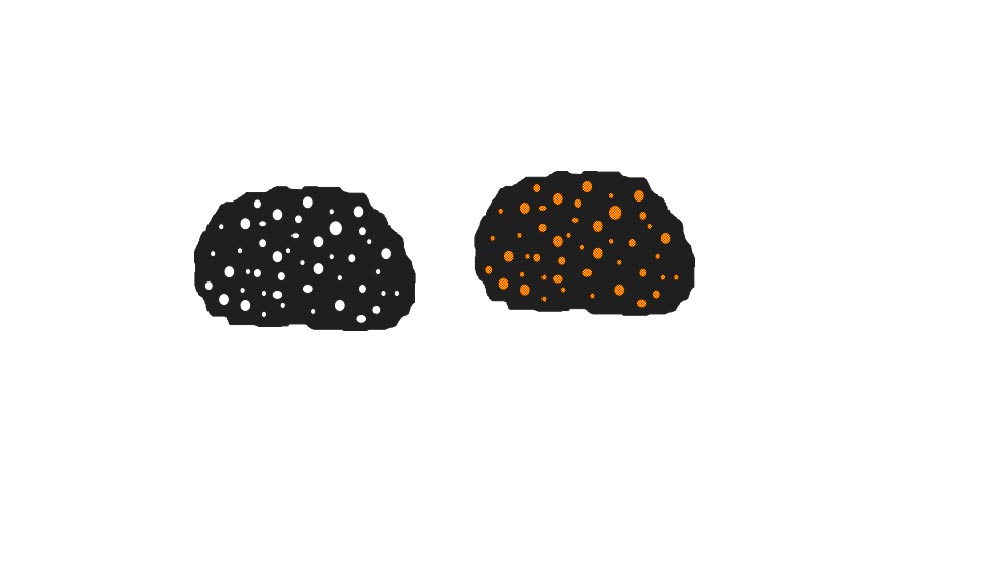
The efficiency of the activated carbon filter therefore depends largely on the quantity, form and type of activated carbon. Here it's worth distinguishing once more between coal-based carbon and carbon obtained from coconut shells. The latter shows clearly improved filtering results.
As a general rule, the finer the activated carbon, the higher the filtering result for the same amount (because of more surface area).
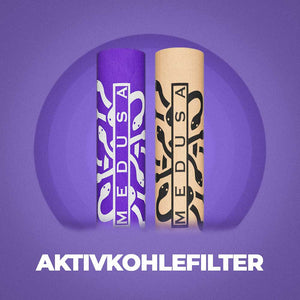
It is held in place by perforated ceramic closures or by open-pored cellulose caps (e.g. Medusafilters). By the way, there are now even activated carbon filters for the bong and the odd pipe.
Activated carbon filters with ceramic vs. cellulose caps – which is the better choice and what do they really do?
To reach a meaningful conclusion here, this question has to be looked at from several angles.
By the way: glass filters are also an exciting alternative – you'll find the direct comparison in the article Glass filter vs. activated carbon filter.
1. Pollutant reduction
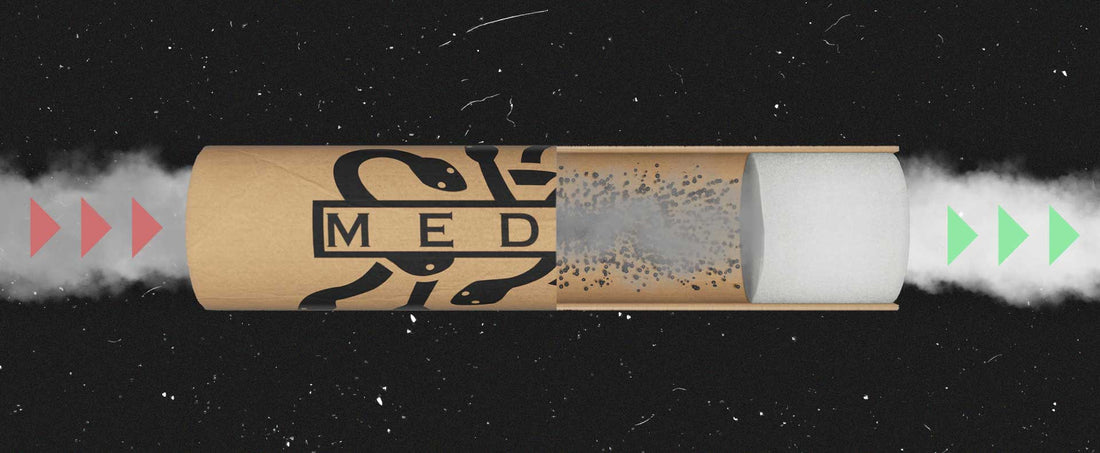
The activated carbon filter in the ceramic version filters while smoking (especially tobacco) with coarse activated carbon pellets which - as we learned above - can absorb fewer pollutants. Due to the design, however, and to avoid bits of activated carbon in the mouth, there is no other way to solve this.
On top of that, inhaling activated carbon dust while drawing is hard to avoid. This quickly leads to a distorted taste and a higher pollutant load.
The cellulose version, on the other hand, does not depend on any perforation and can therefore use much finer activated carbon. This provides higher filtering power with less activated carbon. In addition, the cellulose caps filter the carbon dust as well as tar and nicotine on both sides, without noticeably reducing cannabinoids and the effect of THC.
The taste when smoking with an activated carbon filter in the cellulose version is not distorted.
Active cellulose filter 1. Activated carbon filter with ceramic closure 0.
2. Activated carbon filters while smoking - draw & smoking behaviour
Here, too, the activated carbon filter in the ceramic version goes first.
At first glance the draw seems almost unchanged compared to a "tip". On closer inspection, however, you're faced with something rather more sobering.
Activated carbon works through adsorption on its porous surface - it does not melt or liquefy. The ceramic closure, however, can clog due to moisture and drawing on the mouthpiece, causing the fine holes in the ceramic sleeve to quickly become blocked. This leads to a significantly reduced draw, up to a complete blockage. On top of that, loose activated carbon can get into the mouth if you draw too hard - at the latest then, the hoped-for smoking experience is a thing of the past.
Ceramic filters have no heat protection, so during the burning process the smoke - the closer you smoke your joint down to the filter - can get quite hot. In the best case, this can lead to dry, cracked lips.
The cellulose filter - activated carbon filter:
The open-pored closures of the active cellulose filter are true heroes for every consumer. Not only do they catch the loose activated carbon without clogging, they also provide a cool draw from start to finish even when the joint gets short.
Because your lips are made for kissing.
Active cellulose filter 2. Activated carbon filter with ceramic closure 0.
3. Environmental impact
First of all, it should be said that the correct disposal of every filter is a prerequisite for this comparison. Because of the pollutants captured in the filter, environmental damage cannot be avoided if it is disposed of carelessly. But let's now turn to the manufacture of activated carbon filters and their material properties.
The ceramic filter uses, besides a cardboard sleeve and design paper, of course the two ceramic caps that give it its name. This is one of the oldest materials in human history. Although it can basically be described as a natural product, ceramic production still requires enormous amounts of energy today, because the ceramic often has to be heated or sintered for 6-12 hours at 1200°c. With it, any claim to environmental neutrality in production goes up in smoke too. As current studies show, what is particularly harmful to the environment is the fact that the mass production of ceramic products almost always uses fossil fuels to fire the kilns – which results in correspondingly harmful emissions. On top of that, ceramic is not biodegradable - so it can easily outlast a human lifetime or even entire generations.
Cellulose is different. More precisely, here we're talking about cellulose acetate. This is a biodegradable, bio-based plastic that can be used, for example, to make sustainable food packaging. Not to be confused with what is used in a classic cigarette filter. Accordingly, it also ends up in municipal waste. Cellulose acetate (abbreviated CA) is indeed counted among the thermoplastics, but it is more of a modified natural material. During production, cellulose - usually present in the form of natural pulp - is esterified with acetic acid and acetic anhydride. Are there now processes that are completely nature-compatible and environmentally friendly? Yes, this one!
Active cellulose filter 3. Activated carbon filter with ceramic closure 0.
Of course, when assessing and comparing two product groups, further factors such as price, brand standing and personal preferences also play a decisive role. This comparison is only meant to provide the basis for that.
Summary - which activated carbon filter for the best smoking enjoyment?
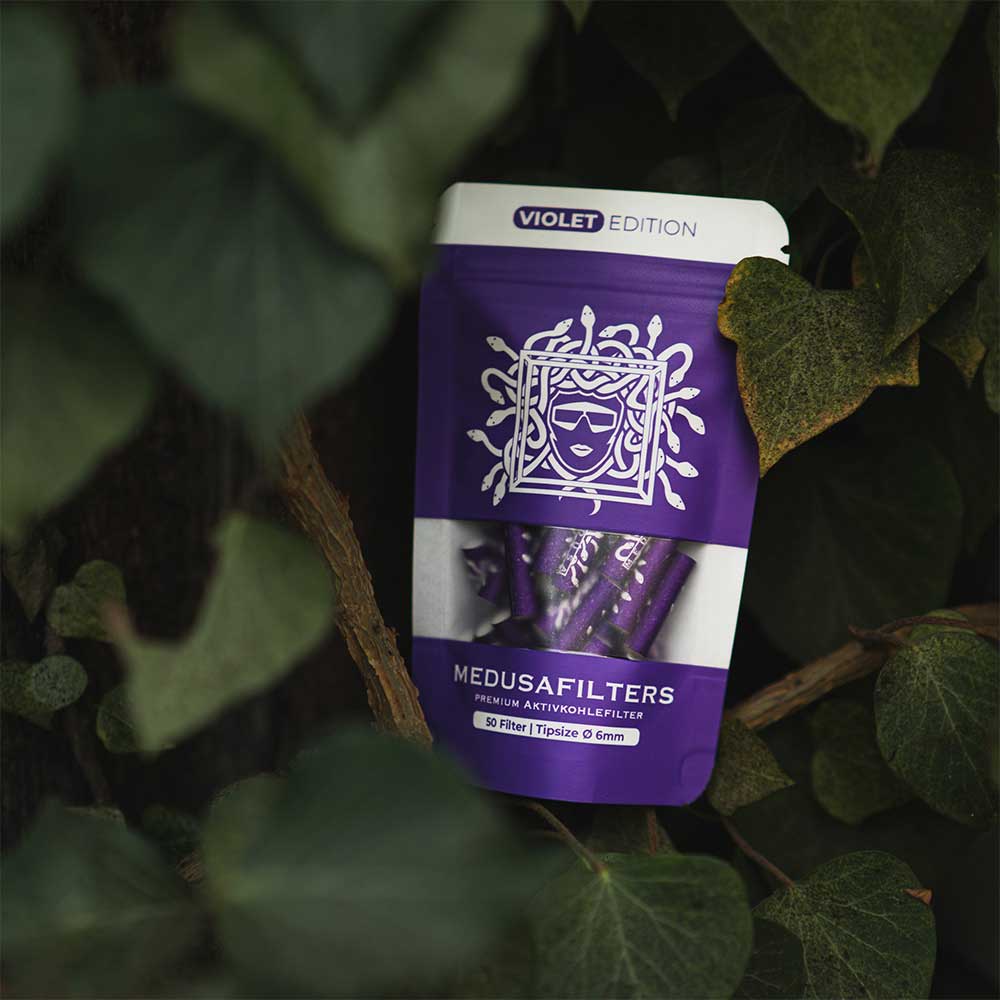
That activated carbon filters definitely win the race compared to cigarette filters without carbon should be clear by now, but even among the activated carbon filters themselves there are big differences in filtering result and quality. An activated carbon filter joint should give you the most pleasant smoking experience possible without drawing attention to itself. Cellulose activated carbon filters are on the rise and clearly came out ahead in our comparison too. But see for yourself – for example in our activated carbon filter overview! Which models are currently leading is shown in our ranking of the best activated carbon filters. How long you stay "high" in the process, you'll find out in our article How long does a high last?
What do activated carbon filters filter out when smoking?
Activated carbon filters mainly bind tar, ash, coarse particles and part of the water-soluble pollutants from the smoke. They work through adsorption - substances are deposited on the carbon's huge inner surface.
The core of an activated carbon filter is granulate made of highly porous activated carbon. A single gram brings an inner surface of several hundred square metres - that's where particles and many smoke components deposit as you draw. In practice, a visible part of the tar remains as a brown coating in the filter instead of reaching the mouth and throat. Coarse ash particles and crumbs are also caught, so no tobacco or plant material is drawn through. Important to know: a filter does not remove everything and does not make smoke harmless - it only reduces part of the unwanted components. The effect, in experience, is a clearer, less harsh draw. The fresher the activated carbon and the more slowly you draw, the more the filter can absorb. A soaked filter should be changed.
What do activated carbon filters do for joints?
For joints, activated carbon filters provide a noticeably cooler, softer draw and hold back crumbs as well as part of the tar and pollutants. Many find the smoke more pleasant and less harsh on the throat as a result.
A joint burns with high heat, and the smoke often reaches the mouth and throat hot and intense. A 6 mm activated carbon filter inserts a cooling section between the burning zone and the draw: the smoke travels a longer path through the carbon granulate and arrives noticeably cooler. At the same time, the filter prevents plant material or ash from being drawn through - the classic crumb in the mouth is avoided. In experience, the aroma is largely preserved, because the carbon mainly binds coarse and water-soluble components, not the fine flavour notes. Compared to a simple rolled tip or cardboard filter, the difference in coolness and cleanness of the draw is most noticeable. Important: consumption is reserved exclusively for adults within the legally permitted framework. A filter does not make smoking healthy, it only changes the draw experience.
Why is the draw cooler with an activated carbon filter?
The smoke travels a longer path through the carbon granulate and gives off heat in the process. The result is a noticeably cooler, gentler draw that is less harsh on the throat.
Coolness arises mainly from distance and surface area. In an activated carbon filter the smoke does not flow through an empty cavity, but through densely packed granulate with many small gaps. Along this path it gives off heat to the carbon and the filter wall before it reaches your mouth. In addition, the granulate slightly slows the flow, so the draw feels softer and more controlled. Many users describe the effect as rounder and less biting - especially compared to a draw without a filter or with a plain cardboard tip. The 6 mm diameter has established itself as a good compromise here: thin enough for most rolling techniques, thick enough for an effective cooling section. If you draw more slowly, there is more time for heat exchange and the draw becomes even cooler.
How do you use an activated carbon filter correctly?
Place the activated carbon filter at the mouthpiece end of your joint, roll it in cleanly and draw rather slowly. That way you make the most of the cooling and filtering effect.
- Insert the filter: Place the 6 mm filter at the end you draw from - that way the smoke first passes through the paper and then through the carbon.
- Roll in cleanly: Wrap the paper tightly around the filter so no false air gets past and all the smoke runs through the granulate.
- Draw slowly: A calm, even draw gives the carbon more time to absorb heat and particles.
- Change in good time: If the draw becomes hard or the filter looks dark and damp inside, swap it - a saturated filter hardly absorbs anything more.
- Store dry: Keep filters cool and dry so the activated carbon retains its absorption capacity.
Activated carbon filter or glass filter - which is better?
Activated carbon filters filter and cool chemically-mechanically and are disposed of after use; reusable glass filters cool and catch crumbs, but can be cleaned and used again and again. The best choice depends on your priorities.
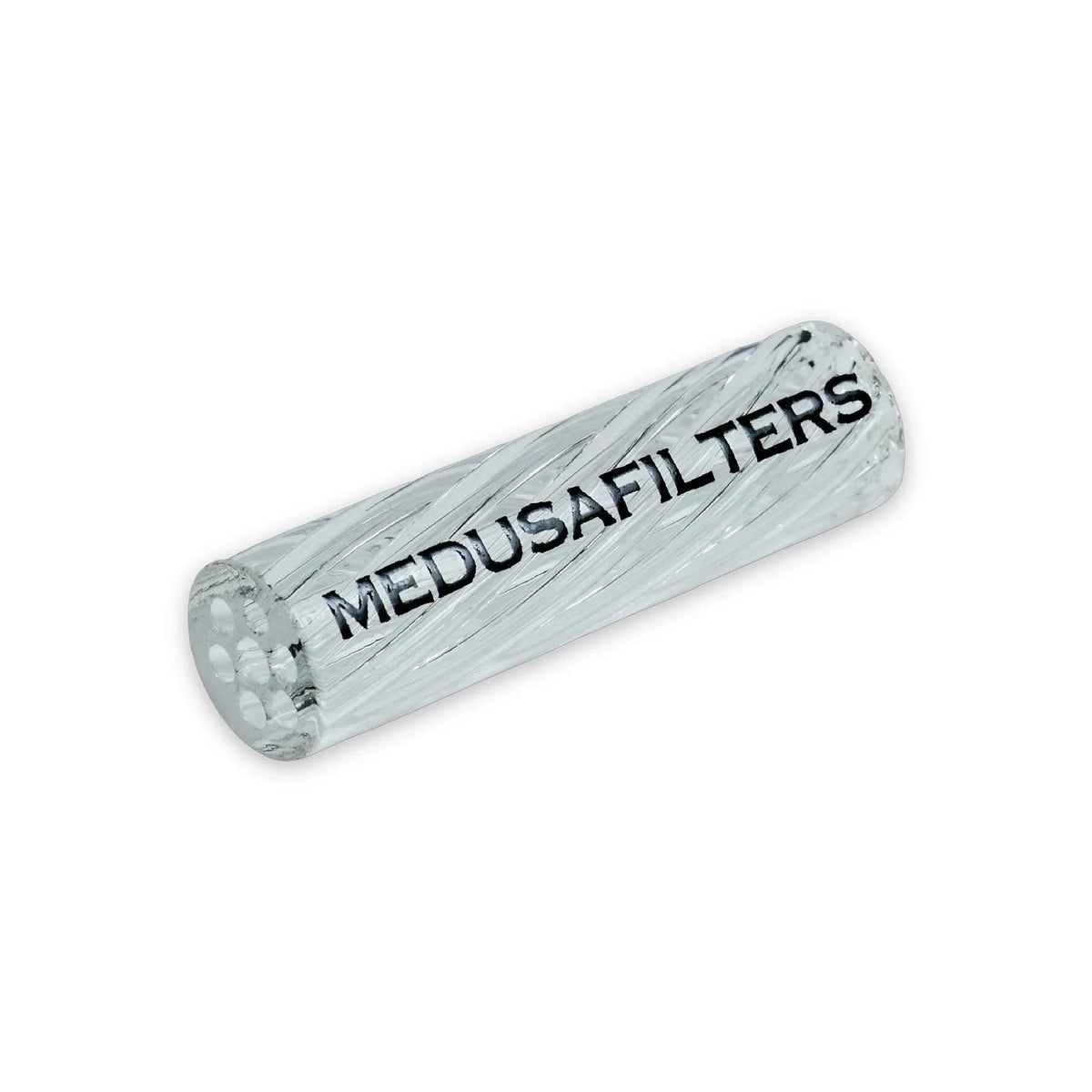
An activated carbon filter scores with its adsorption effect: the granulate binds tar and part of the pollutants and delivers a particularly cool draw. The downside is that it is a single-use product and has to be replaced once saturated. A reusable glass filter, on the other hand, relies on distance and a smooth channel: it reliably holds back crumbs, cools the smoke and can be rinsed out after use and reused - which saves material in the long run. The filtering effect against fine pollutants is lower with the glass filter, though, because it lacks the active carbon. Anyone who wants maximum coolness plus pollutant reduction reaches for the activated carbon filter; anyone who values sustainability and a clean, crumb-free draw is well served with a glass filter. Some combine both - a glass filter as the base, activated carbon for on the go. Both are available at Medusafilters in the 6 mm standard size.
Do activated carbon filters also have disadvantages?
Activated carbon filters are single-use products, lose their effect over time and do not make smoke healthy. A saturated filter can make the draw harder and should be changed.
As practical as the cooling and filtering effect is - an activated carbon filter has its limits. It only removes part of the smoke components and cannot cancel out the risks of smoking; going smoke-free always remains the lowest-risk option. As a single-use item it also produces waste, and the carbon eventually becomes saturated: then the effect wanes and the draw becomes tough. Moisture accelerates this point, which is why open filters should not lie around forever. The taste can also change minimally with very fresh carbon, though most people hardly notice it. Anyone who keeps this in mind - fresh filter, slow draw, timely change - gets the best out of it. And once again clearly: activated carbon filters change the draw experience, they are not a health product and consumption remains reserved for adults within the legal framework.
Haben Aktivkohlefilter auch Nachteile?
Direktantwort: Ja. Aktivkohlefilter sind Einwegprodukte, ihre Kapazität ist begrenzt, sie kosten etwas Wirkstoff mit - und sie machen Rauchen nicht unbedenklich. Wer das erwartet, wird enttäuscht; wer einen kühleren, saubereren Zug will, bekommt genau das.
Der erste Punkt ist die Sättigung. Sind die Poren belegt, nimmt der Filter nichts mehr auf, der Zug wird zäh und der Geschmack flach. Feuchtigkeit beschleunigt das, weshalb angebrochene Filter nicht wochenlang offen herumliegen sollten.
Der zweite Punkt ist der Abfall. Ein Filter pro Session summiert sich, und weil er die aufgefangenen Rückstände enthält, gehört er in den Restmüll und nicht in die Natur. Wer das reduzieren will, findet in wiederverwendbaren Glasfiltern eine Alternative - allerdings ohne die Adsorptionswirkung der Kohle.
Der dritte Punkt ist der wichtigste und wird am häufigsten übergangen: Ein Aktivkohlefilter verändert das Zugerlebnis, nicht das Grundrisiko. Der Rauch enthält weiterhin die Stoffe, die beim Verbrennen entstehen. Angenehmer ja - unbedenklich nein. Die risikoärmste Variante bleibt, gar nicht zu rauchen.
Wenn du dich für einen Filter entscheidest, lohnt der Blick auf Verarbeitung und Kohlequalität statt auf die Packungsgröße. Eine Übersicht aller Varianten findest du in der Aktivkohlefilter-Übersicht von Medusafilters.
The right accessories from Medusafilters


Frequently asked questions about activated carbon filters
They cool the smoke and bind part of the tar, ash and pollutants before it reaches your mouth. The draw becomes noticeably softer and less harsh, while aromas are largely preserved. A filter does not make smoke harmless, though - it only reduces part of the unwanted components in the smoke.
Through adsorption on the carbon's huge inner surface, tar, coarse particles, ash and part of the water-soluble pollutants are deposited. What often remains visible is a brown coating in the filter that would otherwise have reached the throat and lungs. Fine and volatile components, however, are not completely retained.
For most rolling techniques the 6 mm activated carbon filter is the standard size and a good compromise: thin enough to roll in cleanly, thick enough for an effective cooling section. The 6 mm activated carbon filters from Medusafilters fit common papers and tips and provide a cooler, filtered draw. Thicker filters exist mainly for special applications.
Change the activated carbon filter as soon as the draw becomes hard or the filter looks dark and damp inside. As a rule of thumb: one filter per joint or session. A saturated filter hardly absorbs any more particles and can even make the draw harder. Stored dry, fresh granulate stays absorbent for longer.
Activated carbon filters offer the strongest pollutant binding and maximum coolness, but are single-use products. Reusable glass filters cool, hold back crumbs and can be cleaned and used again and again - but they lack the active carbon. At Medusafilters you'll find both in the 6 mm size; many combine a glass filter with activated carbon when on the go.
No. Activated carbon filters change the draw experience - cooler, softer, cleaner - and bind part of the tar and pollutants, but they do not make smoke healthy and do not cancel out the risks of smoking. The lowest-risk option remains abstinence. Consumption is reserved exclusively for adults within the legally permitted framework.
You might also be interested in:




Sources:
Effect of Charcoal in Cigarette Filters on Free Radicals in Mainstream Smoke https://www.ncbi.nlm.nih.gov
Activated charcoal filter effectively reduces p-benzosemiquinone from the mainstream cigarette smoke and prevents emphysema https://pubmed.ncbi.nlm.nih.gov
https://www.abstractsonline.com/pp8/#!/5789/presentation/23033
Disclaimer:
This content is intended for educational purposes only. The information provided is drawn from research work, personal expert conversations and our own experiences that have been compiled together.